


The day trading world attracts a lot of noise and hype. Some social media traders flex screenshots, and paid courses push "secret strategies" to oversell their courses. But in 2026, reading good day trading books will help you gain the right knowledge and educate you on the right skills, strategies, and psychology that help you excel in day trading.
A solid trading book doesn't promise overnight success. Instead, it helps you understand market behavior, risk, discipline, and repeatable processes. Whether you're new to day trading or already active in the markets, the right books can sharpen your thinking and reduce costly mistakes.
We have put together solid day trading books that actually add value and give you the knowledge, technical skills, and expertise that give you the edge to crush the market.
What Makes a Good Day Trading Book?
Not every trading book is worth your time. Many recycle basic concepts or oversell unrealistic expectations. A good day trading book usually shares these qualities:
- Written by an experienced trader or market professional
- Focuses on process, not just profits
- Emphasizes risk management and discipline
- Explains why setups work, not just what to trade
- Applicable to real market conditions
The books below meet these criteria and are widely respected among serious traders.
Good Day Trading Books To Read in 2026
How to Day Trade for a Living – Andrew Aziz
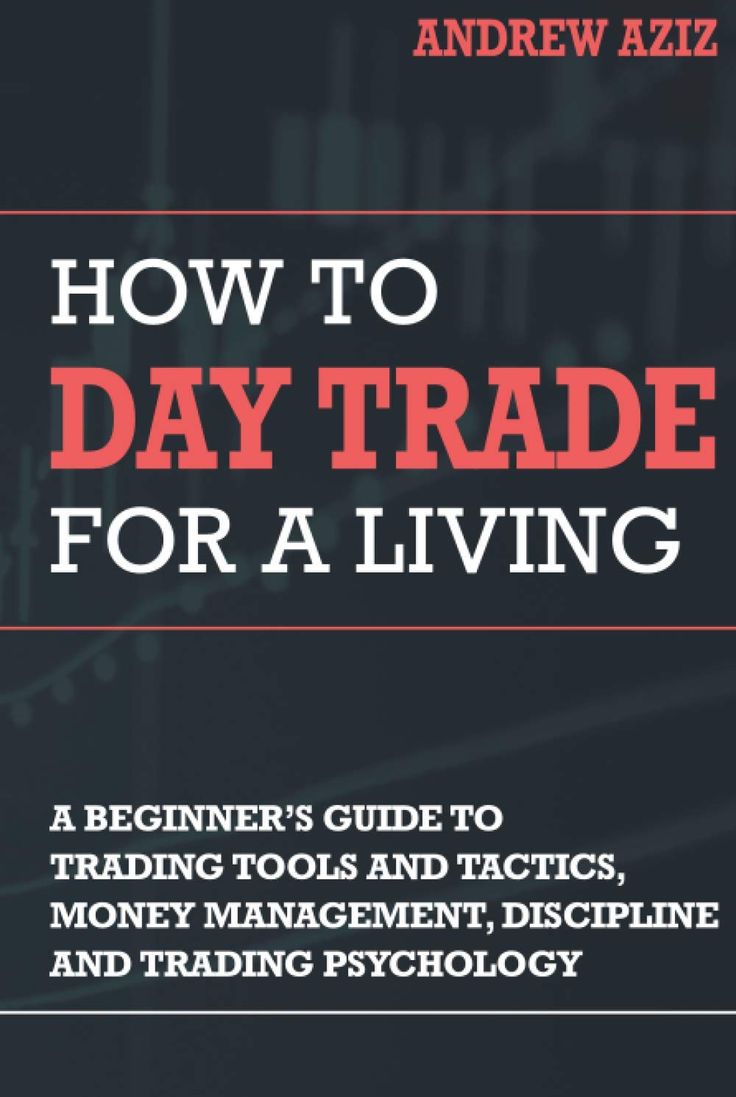
How to Day Trade for a Living is beginner-friendly and breaks down fundamental concepts so that it's easy to grasp. This comes highly recommended, especially if you are just starting, and is very practical, especially for beginners. This book breaks down every fundamental concept you might find hard to understand in the trading space, especially as a beginner.
Andrew clearly explains everything from strategies, how day trading actually works, market structure, risk management, trader psychology, brokers, and even software tools to utilise for a profitable trade in 2026. If you need help understanding the basic concepts and want to know how to start day trading, here's a book that's just right for you.
Why we recommend this book:
- Clear explanations
- Realistic expectations
- Focus on consistency over hype
Best for traders who want a grounded introduction to day trading.
Getting Started in Technical Analysis - Jack D Schwager
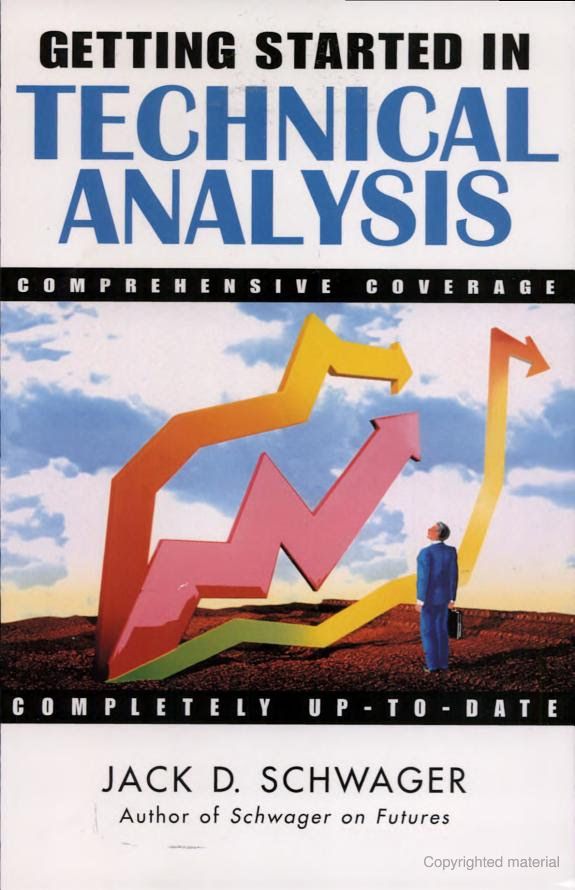
This is a comprehensive guide where Jack clearly demystifies technical analysis in a way that beginners to intermediate traders can find easy to understand.
Getting Started in Technical Analysis introduces you to chart analysis, clearly explained with illustrations and numerous examples. He also clearly explains the chart patterns in trading, how to develop a trading style with them, and make smart trading decisions. This book by Jack is recommended if you want to understand the technical side of daytrading.
Why we recommend this book:
- Clear explanations
- Simple and realistic examples
- In-depth technical analysis
Best for traders who want to understand technical analysis and make better investment decisions.
Trading in the Zone - Mark Douglas

Trading in the Zone is a highly recommended read for any trader serious about improving their performance. The book dives deep into the psychological side of trading, showing you how to approach the markets with confidence, discipline, and consistency. It explains why many traders fail, not because their strategies are bad, but because their mindset is untrained, and how to break the mental habits that lead to costly mistakes.
One of the biggest lessons from the book is that mindset matters more than strategy. You can have a profitable setup and still lose money if your psychology is weak.
Mark Douglas teaches traders to move past emotional decision-making, understand the true nature of risk, and become comfortable operating in a world of probabilities. Once you grasp this, you stop reacting to random outcomes and start trading with clarity and control.
Why we recommend this book:
- Helps you understand and manage trading psychology
- Trains you to eliminate emotions in your thinking
- Explains why even profitable trading setups fail when discipline and emotional control are missing
Trade your way to financial freedom - Van K Tharp

Trade Your Way to Financial Freedom by Van K. Tharp is a must-read for traders who want to build a solid and personalized trading system. The book teaches you how to design an effective day trading strategy, with a strong focus on critical elements like position sizing, exit planning, and risk management. Tharp also explains the common factors that get in the way of successful trading and how to overcome them.
A key highlight of the book is its deep dive into reward-to-risk multiples, helping traders understand how to structure trades for long-term profitability. With real-world examples, updated charts, and insights from top professional traders, the book offers practical advice and actionable ideas you can use to develop your own trading methodology.
Why we recommend this book:
- Teaches you how to build a complete trading system
- Strengthens your risk and position-sizing skills
- Provides practical insights from real traders
A Complete Guide to Volume Price Analysis – Anna Coulling
Volume Price Analysis by Anna Coulling is a foundational book that teaches traders how to read the market price and volume. Rather than relying on lagging indicators, the book focuses on understanding what price movements truly mean when viewed alongside trading volume.
It breaks down candlestick behavior in a practical way, explaining not just how patterns look, but why they form and what they reveal about buying and selling pressure. Coulling also introduces the critical concepts of accumulation and distribution, showing how institutional traders quietly build or unload positions before major price moves occur.
This book works across all markets, from stocks, forex, crypto, and indices. Whether you are a day trader or a long-term investor, it equips you with the skill to interpret raw market behavior without cluttered indicators. In essence, if you have a chart showing price and volume, you have everything you need to analyze the market effectively.
Why We Recommend This Book:
- Tells you the story behind price movements and how to interpret them
- Explains the accumulation and distribution phases
- Helps you master price and volume analysis
Japanese Candlestick Charting Techniques – Steve Nison
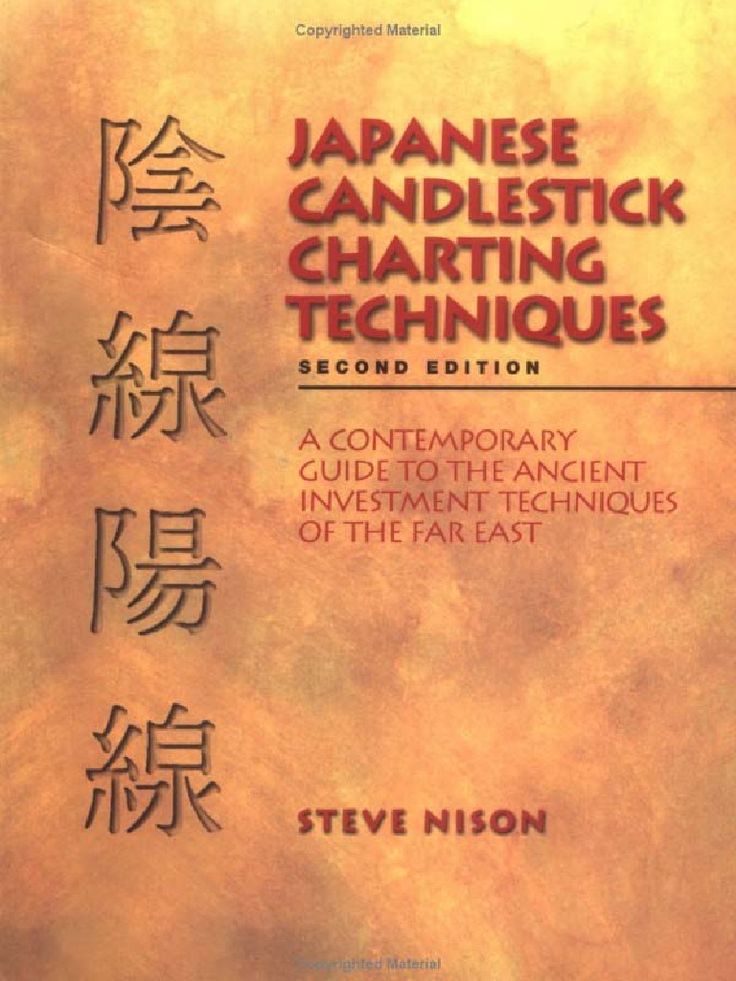
Japanese Candlestick Charting Techniques by Steve Nison is the definitive guide to understanding candlestick analysis, the same charting method that modern traders rely on daily, but rooted in centuries-old Japanese trading principles. Since candlesticks were first developed in Japanese rice markets, this book goes beyond simply naming patterns. It explains the psychology, order flow, and sentiment shifts that each candle represents.
Rather than treating candlestick patterns as memorized shapes, Nison teaches you how to interpret price rejection, momentum, indecision, and trend continuation through candle behavior. This makes the book especially valuable for traders who want to improve entry and exit timing instead of reacting late to market moves.
The updated edition brings candlestick analysis into modern markets, including intraday charts, online trading environments, and swing-trading setups. It also blends Western technical tools with candlestick techniques, giving traders a more complete chart-reading framework. A strong emphasis is placed on risk control and capital preservation, an area many pattern-based traders overlook.
Whether you trade stocks, forex, futures, or crypto, this book equips you with the confidence to read charts clearly, anticipate price behavior, and make better-timed trading decisions.
Why We Recommend This Book:
- Teaches the psychology behind candlestick patterns
- Helps traders improve on entry and exit timing
- Combines classic candlestick methods with modern trading techniques
Read More: Candlestick Day Trading Patterns: How to Read and Trade Like a Pro
Mind Over Markets: Power Trading with Market Generated Information by James F. Dalton, Eric T. Jones, and Robert B. Dalton
Mind Over Markets is one of those advanced books you need as a guide to Market Profile trading, a methodology that goes beyond traditional chart patterns and indicators to reveal how markets actually organize themselves over time. Instead of focusing only on price movement, this book teaches you to understand where price spends time, where value is accepted or rejected, and how professional participants position themselves around these areas.
The book explains how financial markets behave, and with this knowledge, traders can identify value zones, high-probability breakout areas, trend development phases, and institutional activity. This approach transforms chart reading from guessing pattern outcomes into interpreting real market behavior.
Whether you are a day trader, swing trader, or position trader, this book builds the skill of reading market structure with clarity and confidence.
Why We Recommend This Book:
- Teaches you how markets actually organize prices around time and value
- It goes beyond basic chart patterns into professional-level market structure analysis
- It will help you develop advanced market-reading skills
The Art and Science of Technical Analysis: Market Structure, Price Action, and Trading Strategies– Adam Grimes
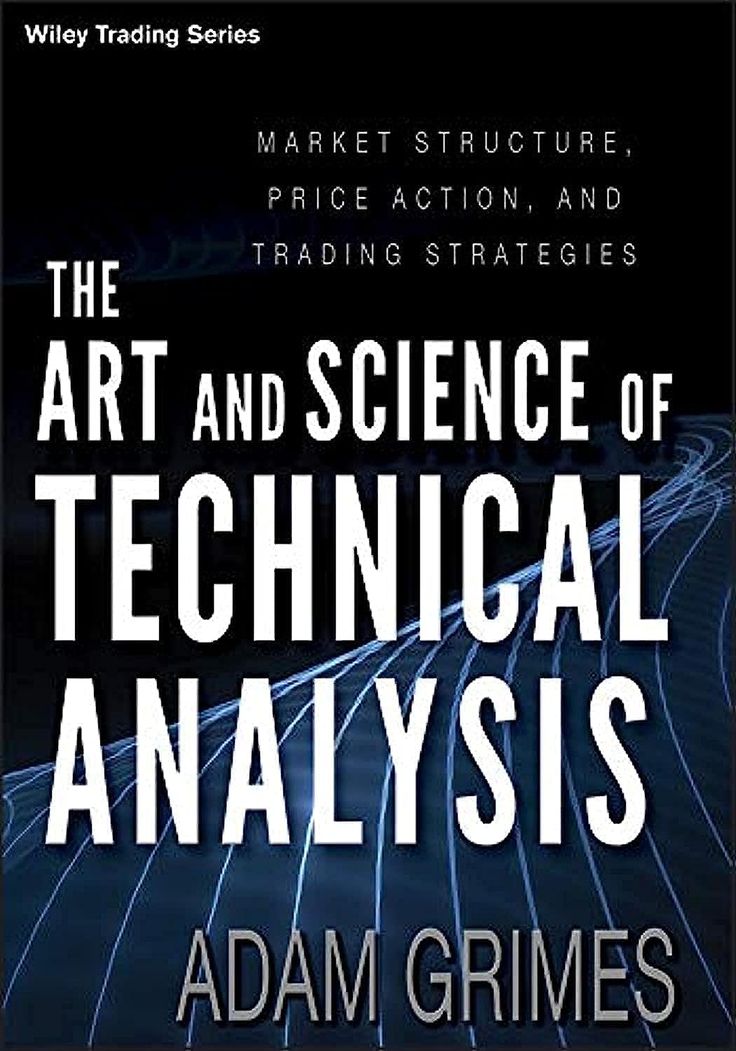
The Art and Science of Technical Analysis by Adam Grimes is one of the most rigorous and practical books ever written on modern technical trading. It goes far beyond drawing indicators and memorizing chart patterns, and instead teaches traders how to think about markets using market structure, price action, statistics, and probability.
Grimes explains that markets are random most of the time and that profitable trading comes from identifying the specific conditions where price behavior is not random, but driven by real imbalances between buyers and sellers. This perspective alone reshapes how traders evaluate setups, risk, and expectations.
The book breaks down how to properly test trading ideas, evaluate technical tools, and separate meaningful patterns from noise. It challenges popular but weak concepts, such as blind Fibonacci use, while validating strategies that hold up under statistical analysis. This makes it especially valuable for traders who want to build research-based, data-driven systems, not just follow internet strategies.
If you want to understand how markets actually behave, when technical analysis truly works, and how to design strategies with a real statistical edge, this book is essential reading.
Why We Recommend This Book:
- Teaches technical analysis grounded in statistics and probability
- Clearly explains market structure and price action at a professional level
- The book covers psychology, performance analysis, and long-term skill development
Market Wizards: Conversation with America's top Traders – Jack D Schwager

Market Wizards by Jack D. Schwager is a classic trading book built around in-depth interviews with some of the most successful traders and risk managers in the world. Instead of teaching one rigid strategy, Schwager brings you to the world of real trading professionals, exposing how they think, make decisions, manage risk, and survive in highly competitive markets.
Each interview reveals the trader's background, biggest wins and losses, strategy development process, and most importantly, their mindset around risk and discipline. What makes the book powerful is the diversity of approaches. Some traders rely on technical analysis, others on macro fundamentals, quantitative models, or discretionary judgment. Yet, common principles emerge: strong risk control, emotional discipline, and consistency.
It's a good book for all and sundry as it cuts across every market, be it stocks, forex, crypto, swing trading, and technical trades, to mention but a few.
Why We Recommend This Book:
- Real insights from proven professional traders
- Covers every trading style and market
- Teaches mindset and risk management
How I Made $2,000,000 in the Stock Market - Nicolas Darvas
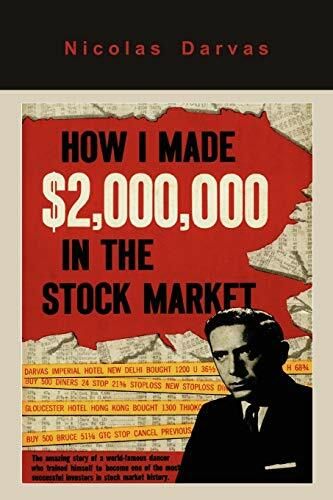
How I Made $2,000,000 in the Stock Market is one of the most fascinating true stories in trading literature. Nicolas Darvas takes readers on his personal journey, from confusion and early losses to discovering a repeatable system that ultimately made him a millionaire trader.
Darvas, an economist, taught himself the stock market by reading hundreds of books and analyzing financial newspapers. With no formal trading background, he began experimenting with stock selection and noticed a powerful pattern: stocks breaking to new 52-week highs often continued rising. This observation led him to develop his now-famous "Box System," a method of buying breakouts, riding trends, and cutting losses quickly.
The book doesn't just explain his strategy; it documents his emotional battles, mistakes, doubts, and breakthroughs. More importantly, Darvas demonstrates timeless principles: follow price, respect trends, manage risk tightly, and ignore noise.
Even decades after publication, the core ideas in this book remain highly relevant, especially for traders interested in momentum, breakout, and trend-following strategies.
Why We Recommend This Book:
- A real-world trading journey, not theory
- Introduces a timeless trend-following strategy
- Reinforces discipline and emotional resilience
Technical Analysis of the Financial Markets: A Comprehensive Guide to Trading Methods and Applications – John J. Murphy
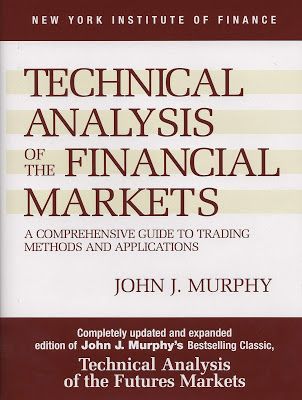
Often called the bible of technical analysis, Technical Analysis of the Financial Markets is a must-read for anyone serious about understanding how price moves in financial markets. John Murphy delivers a complete foundation, from basic chart reading to advanced indicators, trend analysis, and market structure, making this one of the most comprehensive technical trading references ever written.
What makes this book stand out is that it doesn't just show what tools to use; it explains why they work. Murphy walks readers through chart patterns, oscillators, moving averages, volume analysis, and momentum indicators, while also introducing intermarket analysis, the relationship between stocks, bonds, commodities, and currencies. This broader market perspective helps traders understand how different asset classes influence each other.
The updated editions include modern charting techniques, candlestick analysis, stock rotation concepts, and real-world market examples, ensuring the material remains relevant even in today's algorithm-driven markets. Whether you're a beginner learning to read charts or an experienced trader looking for a reliable reference guide, this book delivers lasting value.
Why we recommend this book:
- Applicable across stocks, forex, and crypto
- Explains the logic behind technical tools
- Ideal reference book
The Disciplined Trader: Developing Winning Attitudes – Mark Douglas
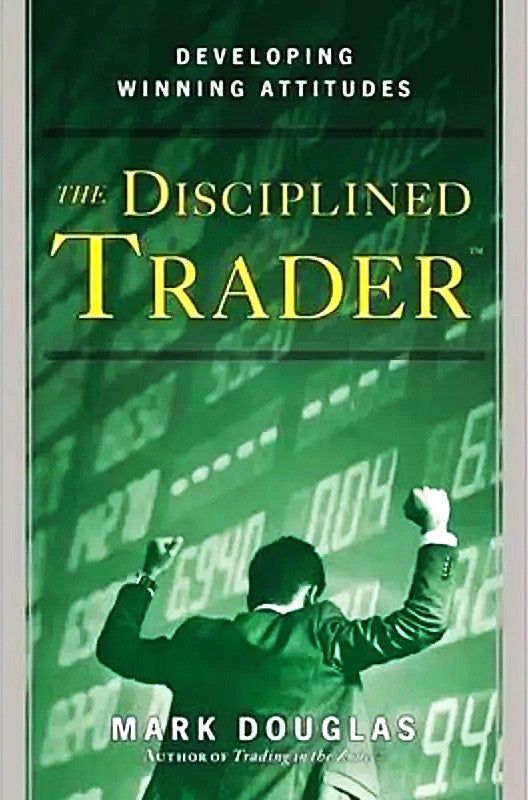
The Disciplined Trader is one of the most important books ever written on trading psychology. While most trading books focus on strategies and indicators, Mark Douglas tackles the real reason most traders fail: their mindset.
This book teaches traders how to develop emotional control, patience, and a probability-based way of thinking. Douglas explains that markets are uncertain by nature, and success comes not from predicting outcomes, but from executing a proven strategy consistently without emotional interference. He breaks down why traders fall into destructive habits like chasing losses, overtrading, or abandoning their rules and shows how to replace those behaviors with discipline and confidence.
The Disciplined Trader gives readers the mental framework needed to stay consistent through wins, losses, and drawdowns. It's a timeless guide for building the psychological edge that separates professional traders from gamblers. Best for traders who struggle with revenge trading or overconfidence.
Why We Recommend This Book
- Helps traders build a professional trading mindset
- Helps traders accept uncertainty and execute consistently
- Timeless lessons for every market
Trading Systems and Methods – Perry J. Kaufman
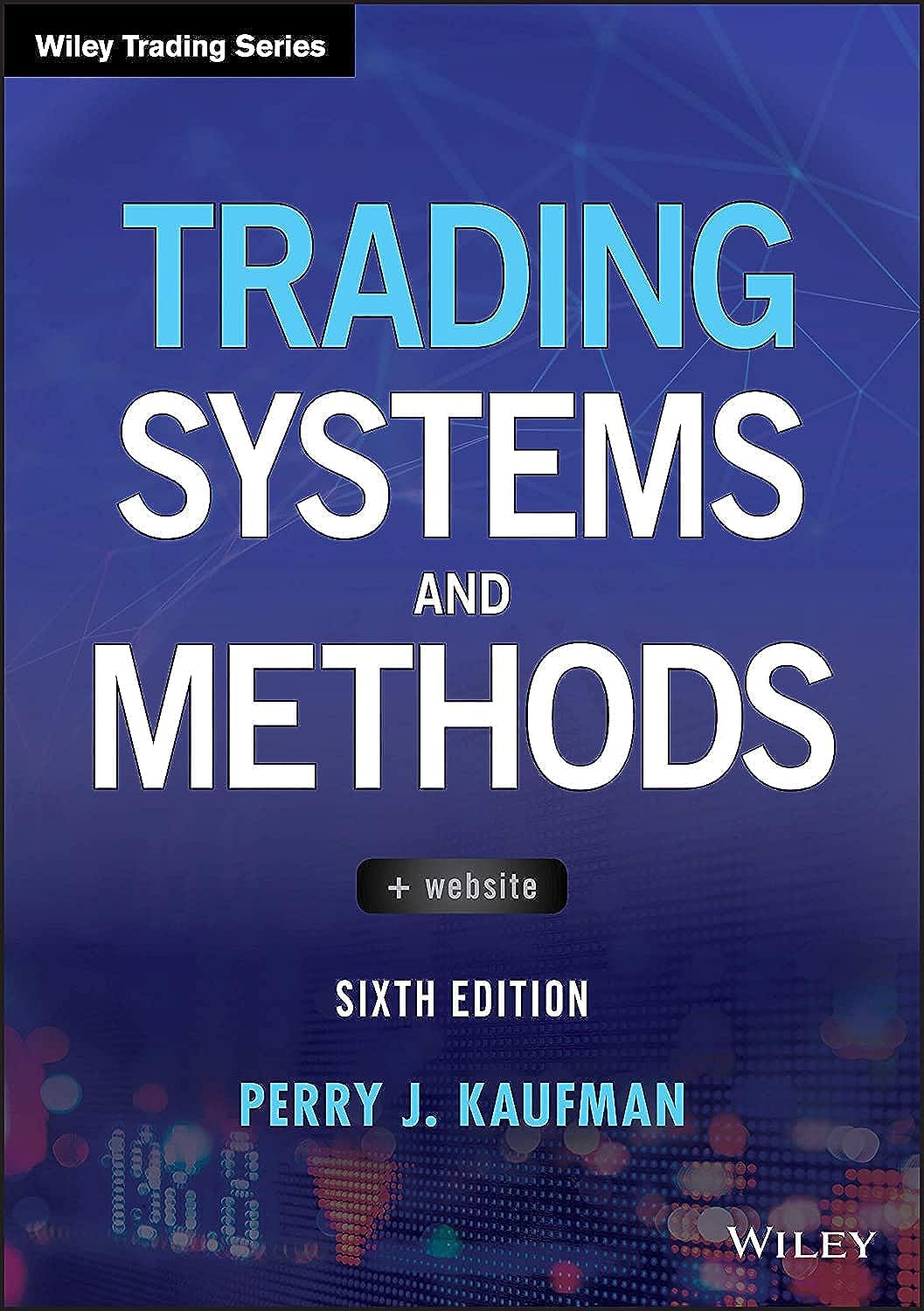
Trading Systems and Methods is a definitive guide to systematic and rule-based trading. Perry Kaufman goes deeper to show traders how to design, test, and validate data-driven trading systems built on logic, statistics, and repeatable rules.
Also, this book breaks down the mathematical and statistical foundations behind successful trading systems in a way that remains practical and approachable. Kaufman explains how to structure trading strategies, determine probabilities, measure risk, and backtest ideas correctly. He also explores trend, momentum, and pattern-based systems, giving readers a framework to compare different strategy types and choose what best fits their goals.
What makes this book especially valuable is its modern relevance. It includes updated examples using stocks, ETFs, and futures, along with coverage of algorithmic trading, arbitrage, high-frequency concepts, AI-driven models, and advanced risk management. With included code examples and spreadsheets, traders can move from theory to real system development.
This book is best for traders who prefer data-driven decision-making or quantitative trading.
Why We Recommend This Book:
- Teaches true system design
- Combines statistics, indicators, and real market examples
- Covers modern topics like AI models, algorithmic methods, and risk management
Conclusion
Reading good day trading books in 2026 is one of the smartest investments any trader can make. While tools, software, and AI assist execution, nothing replaces the deep understanding of market behavior, technical analysis, trading psychology, and risk management that comes from reading experienced traders' insights.
The books listed provide actionable strategies, proven frameworks, and mental tools that help you trade with discipline and confidence. By combining reading with practice, risk management, and a structured trading plan, you'll develop the skills to make informed decisions, reduce costly mistakes, and grow as a trader over time.
In short, whether you're a beginner or a seasoned trader, these books serve as both a foundation and a reference library to elevate your trading edge in 2026 and beyond.
Related Read: 6 Best AI Stock Trading Bots and Software
Frequently Asked Questions
Are day trading books still relevant in 2026 with AI trading tools?
Yes. AI tools assist execution and analysis, but they don't replace understanding market behavior, risk management, or trader psychology. Books build foundational thinking, a skill AI cannot automate.
Should I read day trading books before using a real-money account?
Absolutely. Reading trading books before risking capital helps you avoid beginner mistakes, understand market structure, and build a plan before emotions enter the equation.
How many trading books should a beginner read?
Start with 2–3 core books: one on technical analysis, one on psychology, and one on risk management. Too many at once can cause information overload without practice.
Do professional traders still read trading books?
Yes. Many professional traders continually study books on market structure, behavioral finance, and system design to refine their edge and stay adaptive.
Can reading trading books make me consistently profitable?
Books won't make you profitable alone, but they dramatically shorten the learning curve by teaching proven frameworks, mistakes to avoid, and professional thinking habits.
Which book should I read first as a complete beginner?
"How to Day Trade for a Living" by Andrew Aziz is the most beginner-friendly starting point before moving into psychology and technical analysis.
Follow Us On Social Media